
Indian culture has many festivals and vows whose purpose is not only religious devotion but also the protection of social health, balance, and collective well-being. Among these ancient traditions, one very important festival is Sheetala Ashtami. This sacred observance is dedicated to Sheetala Mata, who is believed to be the goddess who protects people from diseases.
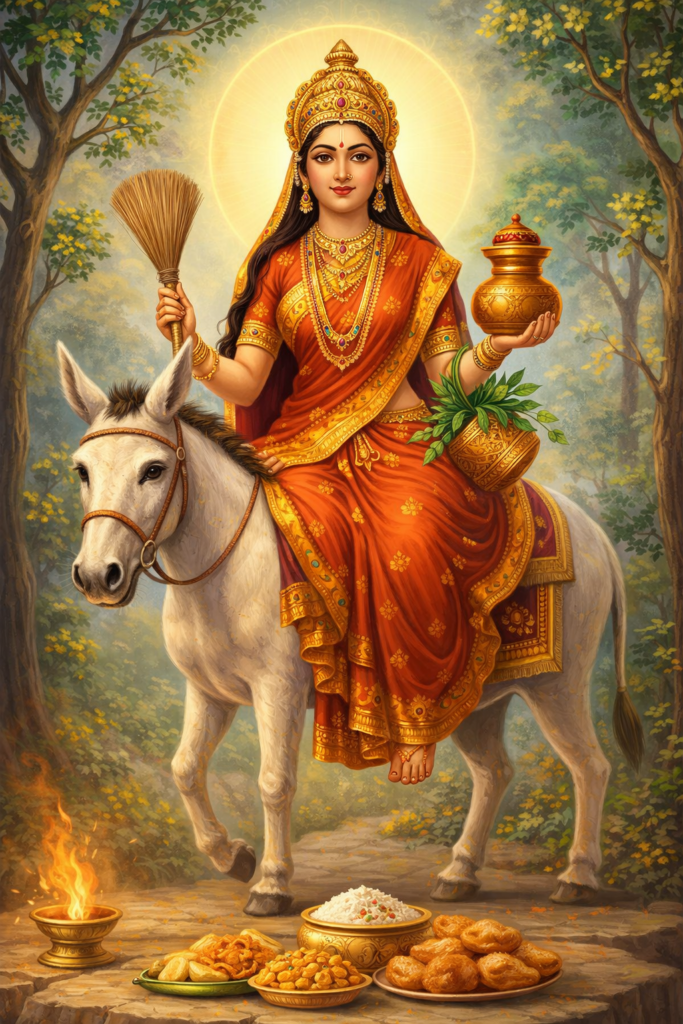
This festival is celebrated with deep faith and devotion in many parts of India, especially in Rajasthan, Uttar Pradesh, Madhya Pradesh, Gujarat, and Haryana.
Sheetala Ashtami is also known in many places as Basoda or Basora. On this day, food prepared the previous day (cold or stale food) is offered to the goddess, and no cooking is done in the house. This tradition reflects not only religious belief but also a deep cultural understanding related to health and cleanliness.
The Form and Symbolism of Sheetala Mata
In Hindu scriptures and folk traditions, Sheetala Mata is regarded as the goddess who calms and removes diseases. Her form is very distinctive. She is generally depicted riding a donkey. In her hands she holds a broom, a pot (kalash), a winnowing fan, and neem leaves.
Each of these symbols carries deep meaning:
Broom – symbolizes the removal of diseases and impurities Neem leaves – represent medicinal and disease-fighting properties Kalash (water pot) – symbolizes cooling, healing, and life Donkey – represents humility, service, and endurance
According to traditional belief, Goddess Sheetala especially protects people from smallpox and infectious diseases. In ancient times, when medical science was not advanced, people prayed to the goddess for protection from epidemics and illness.
When is Sheetala Ashtami Celebrated?
Sheetala Ashtami usually falls eight days after the festival of Holi. According to the Hindu lunar calendar, it is observed on the eighth day (Ashtami) of the Krishna Paksha in the month of Chaitra.
In some regions it is observed in the month of Phalguna as well. The exact date may vary slightly depending on regional traditions, but the purpose and rituals remain largely the same.
History of Sheetala Ashtami
The worship of Sheetala Mata is believed to be extremely ancient. Many scholars suggest that this tradition may be thousands of years old. In ancient Indian society, whenever infectious diseases spread, people prayed to Goddess Sheetala for protection and relief.
Some Puranic and folk traditions also mention Sheetala Mata. According to these narratives, the goddess appeared to protect humanity from diseases.
In earlier times, smallpox was a very dangerous and widespread disease. Because medical knowledge and treatment were limited, people often associated such epidemics with the divine powers of the goddess. Therefore, special prayers and rituals were performed to please her.
Many historians also believe that the tradition of Sheetala worship reflects ancient community knowledge related to hygiene and health. For example:
Use of neem leaves Consumption of cooled food Cleaning homes and surroundings
These practices could help reduce the spread of infections.
Major Rituals of Sheetala Ashtami
1. Preparing Food One Day Before
All food for the festival is prepared one day before Sheetala Ashtami. Common dishes include:
Puri Sweet rice Curd Pakoras Gujiya
The next day this cooled food is offered to the goddess and then consumed by the family as prasad.
2. No Cooking on the Festival Day
On Sheetala Ashtami, the cooking stove is not lit. This practice is considered a mark of respect toward the goddess. It also symbolically teaches restraint and rest for the body.
3. Morning Worship
Devotees wake up early, take a ritual bath, and visit the temple of Sheetala Mata to offer prayers.
Typical offerings include:
Neem leaves Cold food Water Vermilion (roli) and rice
4. Importance of Neem
Neem holds special importance during this festival. Many devotees keep neem leaves at home or offer them in temples. In Ayurveda, neem is widely recognized for its medicinal and antibacterial properties.
Folk Stories Related to Sheetala Mata
Many folk stories about Sheetala Mata are popular in different parts of India. One well-known story tells of a king who ignored the rules of Sheetala Ashtami and ordered hot food to be prepared on the day of the festival. As a result, diseases spread throughout his kingdom.
Later, when the king apologized to the goddess and followed the rituals properly, peace and health returned to the kingdom.
Such stories emphasize the importance of discipline, cleanliness, and respect for tradition.
Benefits and Significance of Sheetala Ashtami
1. Prayer for Health
Devotees believe that worshipping Sheetala Mata protects families from diseases.
2. Message of Cleanliness
The festival reminds people of the importance of hygiene and sanitation.
3. Social Harmony
On this day, people visit each other’s homes and share prasad, strengthening social bonds.
4. Respect for Nature
The use of neem and other natural elements reflects respect for nature and traditional ecological knowledge.
How Ancient is Sheetala Ashtami?
Historians estimate that the worship of Sheetala Mata may be at least 1500–2000 years old. Some traditions even suggest it may be older.
This festival reflects an ancient understanding in Indian society where religion, health, and nature were deeply interconnected.
Relevance in Modern Times
Today, medical science has advanced greatly, but the cultural and spiritual significance of Sheetala Ashtami remains strong.
The festival reminds us that our ancestors had deep knowledge about health, hygiene, and community welfare. It represents not only devotion but also a tradition that integrates spiritual faith with practical life.
Conclusion
Sheetala Ashtami is an important and ancient festival of Indian culture. It is not only a symbol of religious devotion but also a tradition connected with the protection of public health, cleanliness, and social harmony.
Through the worship of Goddess Sheetala, devotees pray for protection, health, and prosperity for their families. At the same time, the festival reminds us of the wisdom of our ancestors, who beautifully integrated spirituality with practical knowledge for the welfare of society.