In many Indian households, a special ritual is performed on the sixth day after a child is born. It is called Chhathi, Chhathiyar, or Shashthi Pujan in different regions. On that day, a lamp is lit in the home, rice or fruits are offered, paper and pen are placed near the newborn, and family members quietly give their blessings.
But if someone is asked today, “Why do we celebrate the sixth day?” the common answers are:
“It is our tradition.”
“The child’s destiny is written.”
“It has been followed by our elders.”
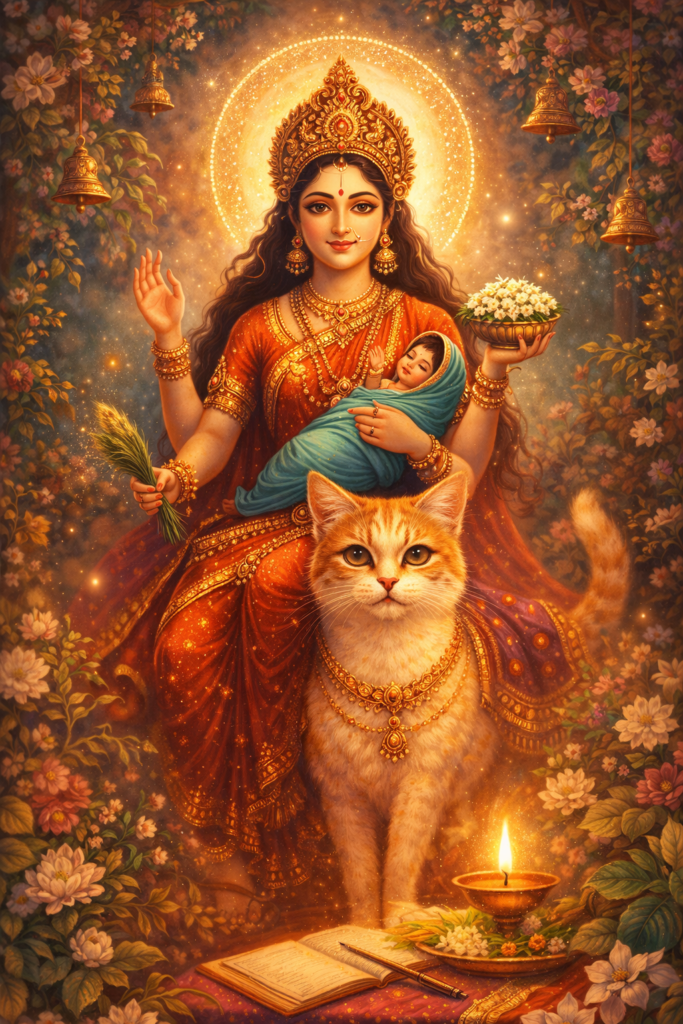
Very few people know that behind this beautiful tradition stands an ancient goddess — Shashthi Devi.
The Meaning and Significance of “Shashthi”
The word Shashthi literally means “sixth.” In the Hindu lunar calendar, the sixth day of the bright fortnight is called Shashthi. However, the sixth day after childbirth holds a special connection with this goddess.
According to popular belief, on the night of the sixth day after birth, Shashthi Devi visits the newborn and writes the child’s destiny. That is why in many homes a lamp is kept burning through the night, and paper and pen are placed near the baby’s head — symbolizing that the goddess will inscribe the lines of the child’s future.
Today, this has become a ritual that many follow without questioning. Yet behind it lies deep spiritual and cultural meaning.
Scriptural References
Shashthi Devi is mentioned in ancient texts. In the Skanda Purana, she is described as the protector of children and the giver of offspring. In some traditions, she is considered a motherly aspect or divine power associated with Lord Kartikeya (Skanda).
While the Vedas do not directly emphasize her name, references to mother goddesses and child-protecting deities appear in early traditions. Over time, her identity became clearer in the Puranas and regional folklore.
Why Is Her Vehicle a Cat?
Shashthi Devi is often depicted riding a cat. Folk stories warn that harming a cat may anger the goddess.
One popular tale narrates that a woman once mistreated a cat. As a result, her children mysteriously disappeared. When she repented and prayed to Shashthi Devi, her children were returned safely. Symbolically, the story teaches compassion, especially toward living beings.
In rural societies, cats protected stored grain from rodents, indirectly safeguarding the family’s survival. Thus, both the cat and motherhood symbolized protection and nurturing.
The Sixth Night — The Writing of Destiny
In Indian philosophy, karma and destiny hold deep significance. Life is believed to unfold according to cosmic order. The sixth-day ritual reflects this philosophical concept in a simple, household form.
When a lamp is lit, it is not merely to remove darkness — it represents hope and protection.
When elders bless the child, they are not just speaking words — they are passing wisdom from one generation to the next.
The ritual is not blind superstition; it is a collective prayer in the face of life’s uncertainty.
Social and Psychological Dimensions
In ancient times, childbirth was risky. Infant mortality rates were high. The sixth-day ceremony was not only a religious act but also a form of social support.
The mother received emotional reassurance. The family gathered in unity. The newborn was formally welcomed into society.
Today, medical science provides security. But in earlier times, faith provided comfort and strength.
Why Did She Become “Forgotten”?
As time passed, major deities like Shiva, Vishnu, and Durga gained widespread worship through temple traditions and devotional movements. Shashthi Devi’s worship, however, remained largely domestic and rural.
She was never a temple-centered goddess.
She belonged to households.
With urbanization and changing lifestyles, many folk traditions faded. The ritual survived, but the story behind it slowly disappeared.
Relevance in Modern Times
When we celebrate the sixth day today, we may not consciously remember Shashthi Devi. Yet the ritual reminds us:
Life is fragile. Every birth is miraculous. Community and family support are essential.
The sixth-day ceremony is not merely about destiny writing — it is a celebration of gratitude for life itself.
Conclusion
Shashthi Devi may not stand in grand temples, but she is present wherever a lamp is lit on the sixth day after a child’s birth.
We perform the ritual, yet we have forgotten its meaning.
We follow the custom, yet we do not know the story.
If we understand the spirit behind this tradition, the lamp of Chhathi becomes more than ritual — it becomes a symbol of knowledge, gratitude, and motherhood.
And according to a beautiful folk belief, those who listen to, speak about, or share the story of Shashthi Devi receive her blessings upon their children.
So if this story touches your heart, share it.
Perhaps somewhere, in a quiet home, the next lamp lit on the sixth night will glow even brighter under her silent grace.
If this article helped you, you may support our research and preservation of Sanatan traditions.
Scan the QR code below to contribute.