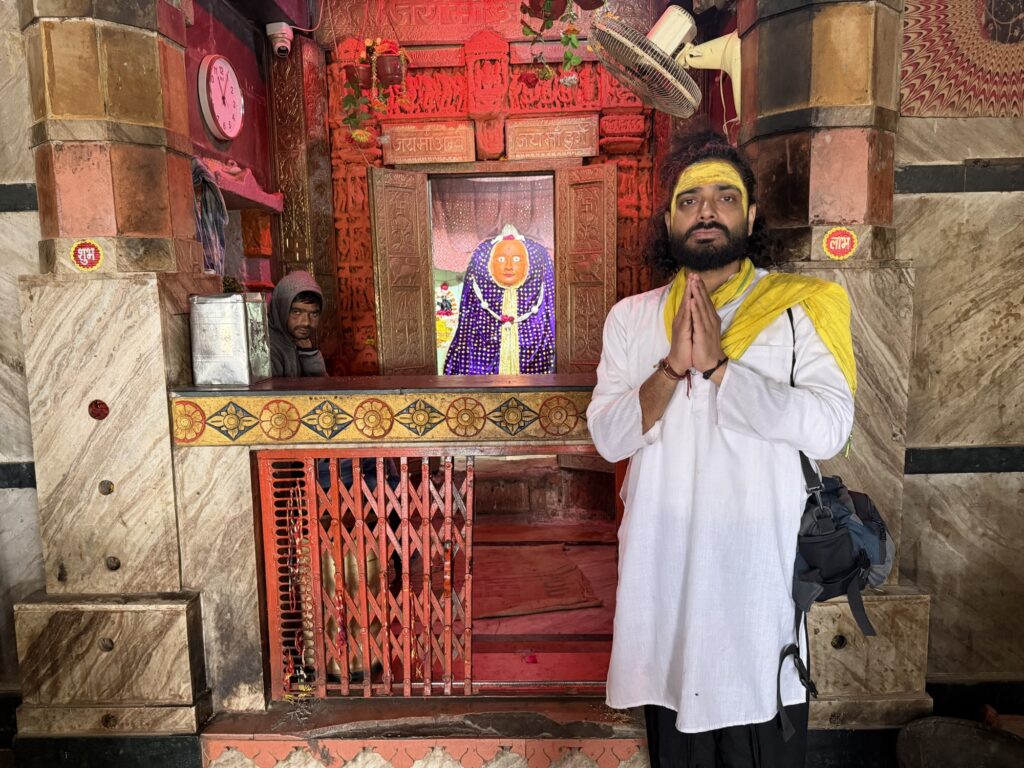
On 20th February 2026, I set out on a journey that felt less like a trip and more like stepping into a forgotten chapter of history. My destination was अंतारी माता मंदिर, located near the border of Neemuch and Mandsaur in Madhya Pradesh.
I wasn’t alone. My companion for the ride was my close friend Amit, and our vehicle was his trusted motorcycle — slightly old, slightly stubborn, but full of character. Much like the land we were about to cross.
What followed was not just a road trip — it was an immersion into landscape, legend, silence, and something I can only describe as an ancient energy that still lingers in that region.
The Beginning of the Ride
We started early in the morning. February mornings in Madhya Pradesh carry a soft chill, the kind that feels refreshing rather than harsh. The sun had just begun painting the sky with faint orange hues when Amit kicked the bike to life.
The plan was simple: ride through the rural belt, pass the nomadic settlements and old ravine zones, and reach Antari Mata by afternoon.
But this wasn’t just any rural belt.
This was Chambal territory.
Entering the Ravines
As we moved deeper into the countryside, the asphalt began to thin out. Smooth roads turned into patchy stretches. Patchy stretches turned into broken surfaces. And broken surfaces eventually dissolved into dusty trails.
The landscape started changing.
The earth dipped and rose unpredictably. Small hills turned into jagged ravines. The soil looked cracked and wild. There were stretches where no houses were visible for miles — just wind, dry shrubs, and the distant cry of birds.
This was the land once ruled by fear.
The Chambal region has long been associated with dacoits — outlaws who knew every curve of the ravines better than anyone else. Among the many names whispered in local folklore is रामरामजी, a feared figure in the area decades ago.
People say he knew these lands like the back of his hand. That he would disappear into the ravines like smoke. That even today, elders lower their voices when speaking of those times.
As Amit and I rode through the broken roads and silent stretches, I could almost feel the weight of that history.
It wasn’t fear.
It was presence.
The Nomad Belt
At one point, we crossed a settlement of nomadic families — tents pitched on uneven land, livestock grazing freely, children playing barefoot in the dust. There was resilience in their eyes. Life here wasn’t easy.
The roads were rough — so rough that sometimes we had to slow down to first gear and balance carefully over stones and potholes. At times, Amit would shout over the wind, “Bro, are you sure we’re going the right way?”
I would just laugh and say, “If this road feels difficult, it must be the right one.”
Because sacred places are rarely reached through comfort.
The Silence of Chambal
There’s something about the Chambal belt that feels untouched. Even today, despite modern development, certain stretches feel like they exist outside of time.
We stopped once near a high ridge. From there, you could see the uneven terrain stretching endlessly. The wind was strong. No traffic. No noise. Just nature and memory.
I closed my eyes for a moment.
It felt like the land remembers.
Not just stories of bandits and police encounters, but stories of faith, vows, fear, survival, and surrender.
The Long Stretch Toward Gandhi Sagar
As we neared the wetlands of गांधी सागर बांध, the landscape began changing again.
Dry browns slowly turned into softer greens. The air felt cooler. The vast water body shimmered under the afternoon sun.
The Chambal River flowed with quiet dignity. After witnessing so much bloodshed in history, today it flows peacefully, nourishing wetlands and wildlife.
The irony struck me — the same land once known for gunfire now echoes with temple bells and bird calls.
First Glimpse of Antari Mata
And then, finally — after hours of riding, balancing, adjusting, and pushing through uneven terrain — we saw it.
The temple.
Nestled near the river, surrounded by natural beauty, stood Antari Mata Mandir.
It wasn’t grand in the architectural sense. It wasn’t massive like famous pilgrimage sites.
But it had something else.
Power.
The Energy of the Temple
The moment we parked the bike and removed our helmets, I felt a strange calmness.
After the chaotic roads and rugged journey, the temple premises felt grounded. Centered.
The bells rang softly. Devotees moved slowly. The wind carried the faint scent of incense.
I stood there for a few minutes without speaking.
Amit looked at me and said, “Worth it?”
I nodded.
More than worth it.
Faith and the Land
Antari Mata is known for deep-rooted local devotion. The temple stands as a spiritual anchor in a land once defined by lawlessness.
I couldn’t help but reflect on the contrast:
• Ravines that once hid outlaws
• Roads that still challenge travelers
• Nomadic settlements surviving through hardship
• And in the middle of it all — a goddess temple radiating stillness
It felt symbolic.
As if faith survived everything.
Beside the Chambal
We walked toward the riverbank near the wetlands of Gandhi Sagar. The water shimmered under the late afternoon light.
Birds flew low over the surface.
The wind had softened.
Standing there, after the long ride, after the dust and exhaustion, I felt gratitude.
Not just for reaching the temple.
But for experiencing the journey.
Because sometimes, the road is the real pilgrimage.
Conversations on the Return
On our way back, the roads didn’t feel as rough.
Maybe because we had already faced them.
Or maybe because reaching the temple had shifted something inside us.
Amit laughed and said, “Next time, car se chalein?”
I replied, “No. Some journeys must hurt a little.”
Reflections
Looking back at 20th February 2026, I don’t remember just the kilometers we covered.
I remember:
• The cold morning air
• The broken roads
• The silent ravines
• The invisible weight of Chambal’s past
• The wetlands near Gandhi Sagar
• The calm face of the goddess
There are places that are tourist destinations.
And then there are places that are experiences.
Antari Mata is the second.
Final Thoughts
If you ever plan to visit Antari Mata Mandir:
Be prepared for rough roads. Start early. Carry water. Travel with someone you trust. And most importantly — respect the land.
Because this region has seen more than we can imagine.
Yet today, it stands peaceful.
And somewhere between dust, river, ravines, and temple bells — you may feel it too.
That silent, ancient energy.